The manifesto
The map is an argument. The document is the proof.
Gesta Carta is built on a single conviction: a thematic map is never a neutral picture — it is a claim about the world. So we made the claim legible. The model never draws pixels; it writes a document. A deterministic renderer draws the plate. What you publish, anyone can read, check, and reproduce.
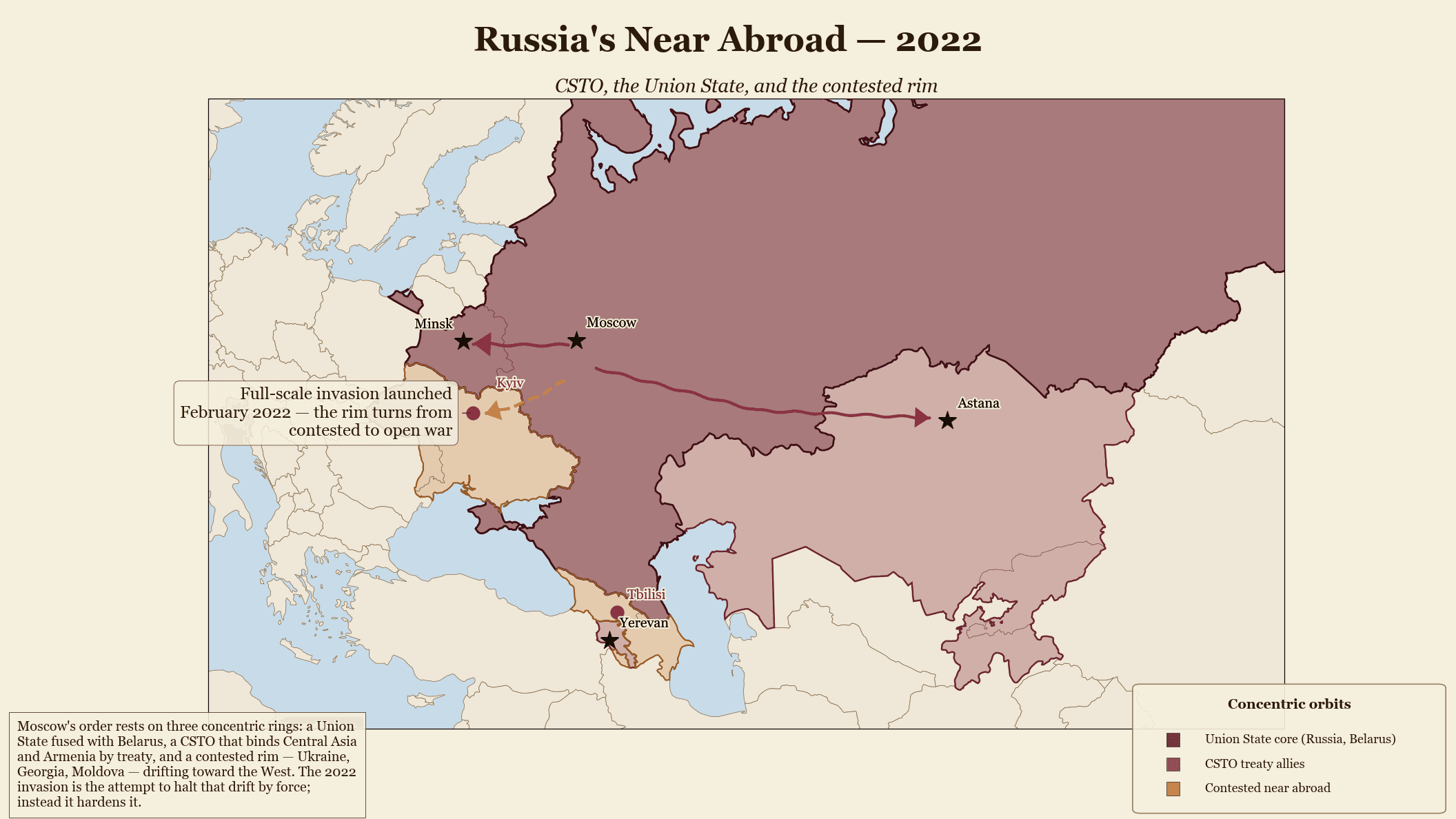
The core bet
The AI writes a document, not an image.
Every map is a declarative document — a cartographic DSL — that names entities, layers and disambiguations. A separate, deterministic renderer turns it into cartography. Geographic accuracy is the renderer’s job, not the model’s: there is no hallucinated coastline, because the model only ever speaks of named entities a trusted dataset resolves. The document is editable point by point, versionable like code, and citable like a source. The DSL is not an implementation detail — it is the product.
map.gesta.yaml
class: gesta-core/continental-narrative@1.0
theme: gesta-core/meridiana@1.0
map_region:
  focus: entity:RUS
  layers:
    - type: zone
      subtype: influence-sphere
      composition: { operation: union,
        operands: [RUS, BLR, …:crimea] }
disambiguation_state:
  crimea: de_facto_post_2014
The lineage
Heir to the continental editorial school.
We work in the tradition of European editorial cartography — the warm grounds, the interpretive zones, the dense arrows and annotations that argue a thesis rather than merely plot data. We don’t copy anyone’s style: we define an original aesthetic that inherits that DNA and give it a name. It is the opposite of the clinical, quantitative data-viz of the Anglo-American school — and a deliberate rejection of the slick, anonymous output of image generators.
Honest about ambiguity
Contestation is shown, never hidden.
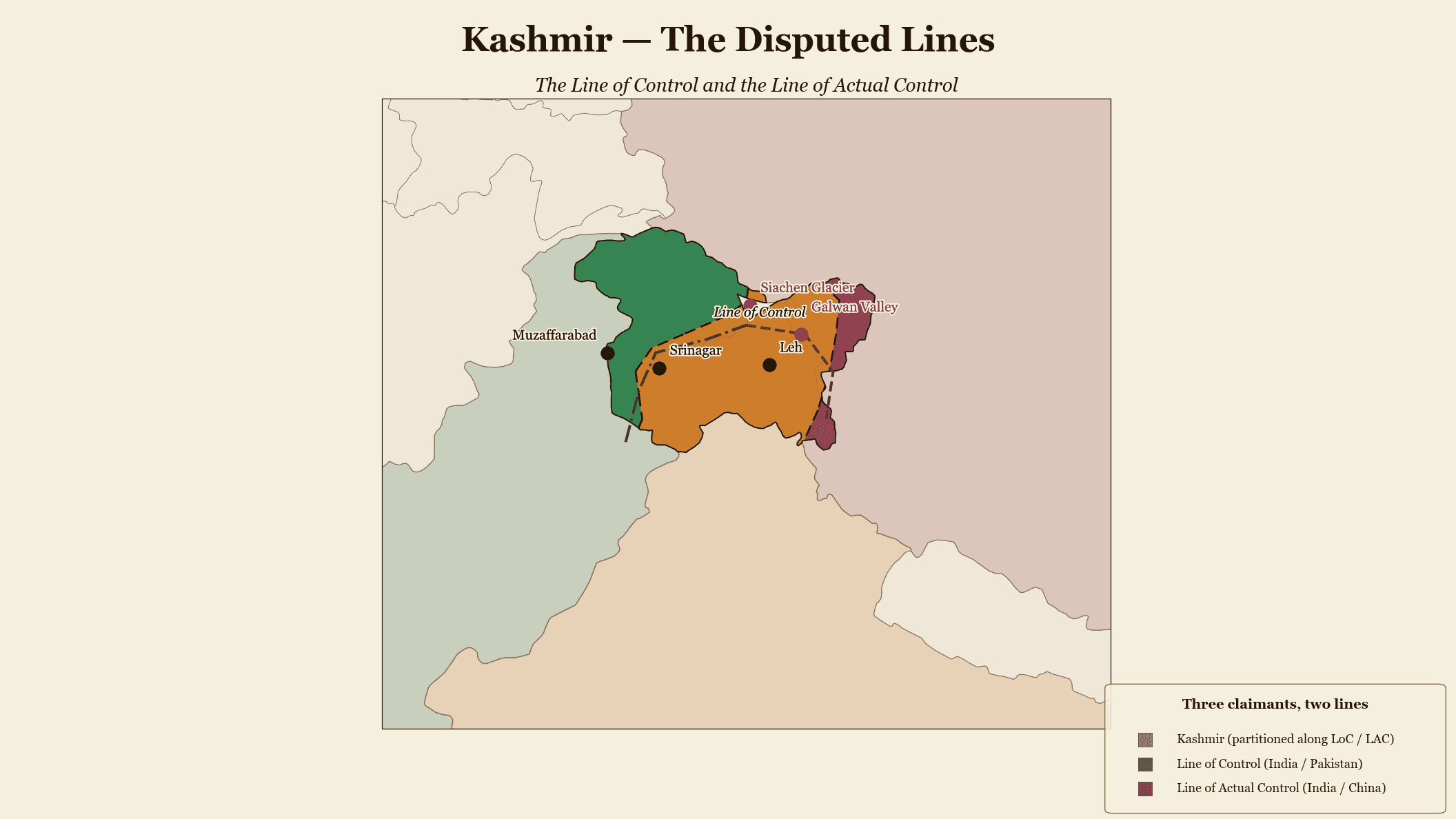
Geopolitical cartography is inherently political. Every map makes contested choices — Crimea, Kashmir, Taiwan, a name, a year. A map with hidden assumptions is unusable professionally and compromising politically. So disambiguations are first-class nodes of the document: the tool doesn’t decide for you, it asks, and what it decides stays visible. Honesty about what a map asserts is not a feature bolted on — it is the point.
What it is not.
Not image-gen
No geographic hallucination — named entities resolved to authoritative geometry.
Not a GIS
No learning curve, no spatial-analysis suite. Write a sentence, get an editorial plate.
Not a pin-drop tool
We don’t scatter points on someone else’s base map. The plate is ours, end to end.
Not a fantasy generator
Real borders are sacred. The argument is yours; the geography is fact.
You bring the analysis. We handle the map.
Gesta Carta does not replace your knowledge of the world. It makes that knowledge visually communicable, coherent, reproducible and editable — a plate you can stand behind, and anyone can read back to its source.